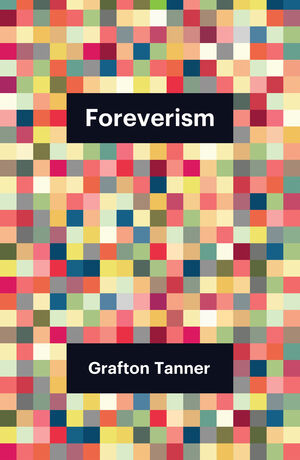
Ina Rae Hark, Star Trek. London: BFI publishing, 2008.
My rating: ***
Star Trek by Ina Rae Hark
The author of this book, Ina Rae Hark is a long-standing fan of the series, dating back to the original 1960s series. She is currently professor of English and Film Studies at the University of South Carolina. In preparation for writing this short but detailed overview of a huge franchise, the author (re)watched a massive 700 episodes of all the Trek series.
She makes no bones about the fact that her two preferred series are the original and Deep Space 9. She also demytholigises Gene Roddenberry’s role in the series. It appears he was a womanising sex addict who stole other people’s work and was impossible to work with. Other sources indicate that he would change the canon of the series at a whim, at one stage saying that the original series was no longer canon and that Star Trek: The Next Generation was henceforth to be regarded as the true canon cancelling out earlier efforts.
Hark mounts some interesting arguments about some of the fears explored by each series. The original series she says, explored the contrast between embodied emotion and non-embodied intellect, coming squarely down on the side of the former. STNG demonstrated a fear of consciousness being invaded or taken over by another. Deep Space 9 expressed an anxiety about identity and its invasion, takeover or anihilation and the co-existence of multiple identities in one body or even bodies with no fixed identity like the shape changer Odo. Voyager played with themes of death and the afterlife in various guises. Enterprise exhibited fears of being held hostage or prisoner against one’s will. Hark argues that this latter fear may be as much the result of a post 9/11 American paranoia as the result of the writers and others involved in trying to perpetuate the Star Trek franchise under increasing pressure from changes in production companies and ratings requirements. (pp. 147-8).
I will take the opportunity to state my own preferences here. My preferred series is Star Trek: The Next Generation. Its critics lambast it for its too perfect characters, corporate overachievers, who avoid family entanglements and interpersonal conflict. Further, they inhabit a space ship which is always spotlessly clean and always luxurious – like the hotels preferred by the CEOs of 1990s corporations. As for myself, I found the overachieving calm orderliness soothing after a hard day at work. I also enjoyed the intellectual problem solving often presented in the episodes.
If there is one criticism I do agree with in relation to this series it is the use of the ‘reset button’ at the end of each episode. There is rarely any reference to previous episodes and nothing ever changes with a static status quo reigning from one episode to the next. This is obviously an artefact of the need to play the episodes out of order when the series went into American syndication, but it is very tedious for the long-term viewer and was already increasingly out of place in a world where fans could either cheaply tape the series or buy it on video. Incidentally, Hark seems to imply that the term ‘reset button’ was coined in response to Voyager (p. 130), but the context in which I personally first heard it was in relation to STNG. And it is obviously used extensively beyond Star Trek. It was Joss Whedon’s series Buffy: The Vampire Slayer which finally had the courage to adapt to changes in video recording technology and serialise mainstream genre television.
But even STNG is still not sufficient to tempt me to want to own the DVDs. I find I have generally exhausted my interest after one or two viewings of episodes. For all the elegance of the series and its interesting philosophical discussions, the characters are simply too bland and develop too slowly if at all. But I am less keen on the other series. The original I find unwatchably cheesy, and in spite of the mythology surrounding it, I find it too reflective of the imperialist, sexist and racist tropes of its time. The melodramatic acting also becomes tiresome.
As much as I would like to enjoy Deep Space 9, particularly after reading Hark’s account, I always stall in my viewing due to my general lack of interest in political intrigue involving struggles for territory and over the governmental or sovereign rule of populations. When these intrigues involve imaginary alien species my interest is even further diminished. This was also a stumbling block for me (apart from the endless tracts of pompous monologue) in relation to Deep Space 9’s rival space station series Babylon 5.
Voyager is depressing viewing as the lost spaceship becomes more and more isolated in its desperate adherence to Starfleet values at any cost, values which seem out of kilter with its surroundings and ultimately with the natural development of its crew members. Perhaps this feeling is generated by, as Hark interestingly explains, the lack of fit between the Star Trek status quo and the 1990s. She notes ‘The repeated rehearsals of disaster [with reset button at the end of the episodes in question] show a writing staff yearning to explore the grittier and edgier territory of 90s’ science fiction television. The repeated resets show the timidity about altering the status quo that was making the franchise increasingly irrelevant as it entered the twenty-first century.’ (p. 134)
The final series, Enterprise, is a ‘prequel’ to the other series and is notoriously the lowest rating of all the franchise. One of the problems, as Hark observes, was that the writers wanted to return to 1960s basics. She reports commercials for the show ran the line: ‘Experience a future when the Klingons were still bad guys, the women were green and the Captain got all the action’. After the cultural and gender diversity of the later series and their sometimes complex philosophical and ethical argumentation, this was not what the new millennium audience wanted to see. An even bigger mistake, Hark suggests, was turning the Vulcans into devious, manipulative racists (p. 145). Incidentally, this view of the Vulcans seems to have been taken up to some extent in J.J. Abrams 2009 ‘reboot’ film and is perhaps one of my major quibbles (amongst many) with this particular film
As a non-American viewer of Enterprise, I found the return to a certain chauvinistic American-ness and maleness – particularly emanating from the two leading male characters – rendered the series hard to watch. I have always felt more than a little ambivalent about the military and often imperialist framework of the entire franchise and its often unconscious assumptions of human (read American) superiority in the Trek universe. As the chorus of The Firm’s song ‘Star Trekkin” runs: ‘We come in peace. Shoot to kill. Shoot to kill.’
I found T’Pol the Vulcan officer in Enterprise, the most interesting character with a wonderful performance by Jolene Blalock, who interestingly, as a long time Trek fan herself, voiced her dismay in an interview in The New York Times at some of the un-Trek like aspects of the new series (p. 140). The series did pick up and started to become more interesting towards the end before it was cancelled. Manny Coto, who created the first rate, but frustratingly cancelled, Canadian series Odyssey 5 for the cable channel Showtime in 2002, was brought in as executive producer for the last season and manage to engineer various improvements (p. 143).
To conclude this discussion, Hark’s book advances a number of interesting ideas and details about Star Trek which fans will no doubt be interested in discussing and picking apart and manages to pack a fairly detailed overview of the entire series into a fairly short space.